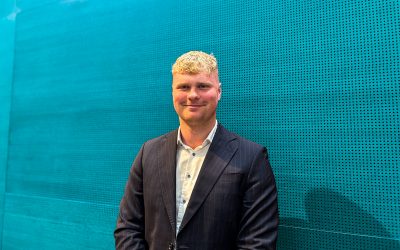
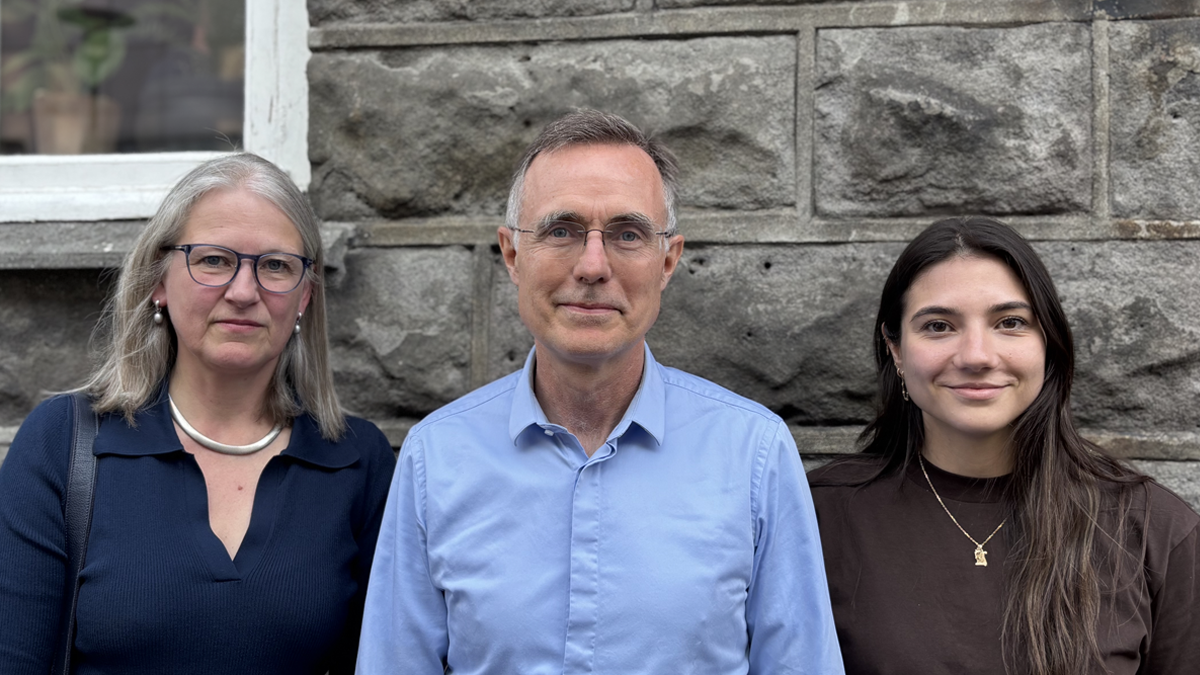
Trine Platou, Edouard Geoffrois, Florine Astruc
Europe is working towards creating a sovereign and inclusive AI environment. Within this effort, it is crucial for different projects and entities to interact and learn from each other. The TrustLLM consortium took the chance and invited the ALT-EDIC team to its conference in Reykjavik, Iceland in June 2025. Edouard Geoffrois, director at ALT-EDIC, shared his insights on how interactions between projects and entities support the vision of developing a strong, multilingual, and trustworthy AI ecosystem in Europe.
A public infrastructure for language technology
The ALT-EDIC is a European Digital Infrastructure Consortium (EDIC) proposed by 10 EU Member States and created by a decision of the Commission in February 2024. Its focus is on language technologies, as its name indicates: Alliance for Language Technologies. “Our mission is to co-develop the ecosystem,” Geoffrois explained, “providing services to the Language Technology (LT) and Large Language Model (LLM) communities – such as data production and model evaluation – but also training, dissemination and communication”. Funded by its members – currently 18 and growing – the ALT-EDIC is a public service entity, designed to serve a wide community rather than specific clients.
The ALT-EDIC is currently building the technical infrastructure needed to support its mission, from software pipelines and annotation tools to expert networks and evaluation frameworks. “If you are a classical research organisation, such efforts are a side business,” Geoffrois said. “For us, it is the core business.”
Synergies with TrustLLM
The TrustLLM conference in Iceland offered a valuable opportunity for interaction between the two teams. “The TrustLLM partners seem very happy to work together,” Geoffrois observed. “Several said that after having worked nationally, TrustLLM enabled them to work across languages and countries, to exchange best practices. We could see European action in motion.” And, Geoffrois added, “the projects we coordinate are complementary to TrustLLM. There is much opportunity for further collaboration. This is exactly what the ALT-EDIC is about; making Europe stronger by developing language technologies together.”
ALT-EDIC services will be available to entities, and to projects like TrustLLM, in areas such as data production, evaluation campaigns, and legal guidance. “When it’s an existing project like TrustLLM, we can collaborate through our own projects,” Geoffrois explained. “For example, if under one existing project, like LLMs4EU, we organise an evaluation campaign, it could be opened to TrustLLM partners.”
Florine Astruc, legal expert at ALT-EDIC, highlighted the importance of sharing practical experiences around licensing and regulation. “We’re seeing the issues you’re facing, which gives us the possibility to anticipate similar challenges in our own projects,” she said. “It also allows us to start thinking about solutions that we might be able to share later, once the situation becomes clearer.”
Trine Platou, project manager at ALT-EDIC, added that this kind of exchange is central to their role: “We are part of the same ecosystem. Meeting each other like this enables exchange of experiences. It makes us stronger together.”
A stable backbone for future innovation
One of ALT-EDIC’s most important features is continuity. “Projects end, but the infrastructure remains,” Geoffrois said. “Even if it’s not ALT-EDIC doing the work directly, partners benefit from having a central entity that ensures continuity, of language data infrastructure, LT tools catalogue, LLM evaluation centre, legal helpdesk, etc.”
Platou compared its role to essential infrastructure, remarking, “it’s fundamental to achieving the goals of European digital sovereignty.”
This stability is also what allows ALT-EDIC to act as a neutral, trusted third party. “We are paid by public money, and we serve the community,” Geoffrois said. “That’s our raison d’être. Our agenda follows the priorities of the industry, but we are a tool, an enabler.”
Evaluation as a compass, data as fuel
ALT-EDIC places strong emphasis on independent evaluation of language models. “Objective evaluation is about offering comparative assessments that are neutral and unbiased. In general, when proper evaluation campaigns are organised, the technology progresses roughly twice as fast,” Geoffrois noted.
“Evaluation can be compared to a compass and data to fuel,” he added. “The researchers and developers, they do the discoveries. We provide, in a way, the fuel and the compass that enable them to make discoveries more efficiently.”
Geoffrois summed up ALT-EDIC’s mission: “We are enabling the development of LLMs aligned with European values. We are a central repository of critical infrastructure, at the service of the community of Europe’s LT and LLM ecosystem.”